

a boat with a story
When I was twenty-one years old, I was hired to run a sweepboat on the Middle Fork for the late Eric Snell of Middle Fork Wilderness Outfitters.
On the day I arrived for the season, Eric pointed to a neglected J-rig frame being swallowed by the spring weeds and grass underneath an apple tree. He jokingly told me that I’d be running that boat for the season.
It was a total joke, of course. We were both well aware of Michelle, the actual MFWO sweepboat that was already rigged and waiting for the season. My history with Michelle is another story entirely—she was the very boat that gave me my first ride down the Middle Fork when I was twelve years old. But as for this J-rig frame in the weeds? It was completely unrealistic to think we could dig it out, let alone outfit it with all the necessary equipment for a trip leaving the very next week.
But to Eric's surprise, I confessed love at first sight.
To others, it was just a hunk of foreign aluminum rotting in the grass. To me, it was a comforting sight. I recognized it immediately as one of the few sister J-rig frames built in Oregon—the exact frames I had spent the beginning of my river career learning to use. At that specific moment in my life, I was branching out. I was leaving the comfortable, family-like environment of my old river company for a new company, a new town, and a new launch date. I was feeling a little shelled up, a little guarded, until I saw that connection to home.
That connection was the neglected hunk of aluminum in the grass.
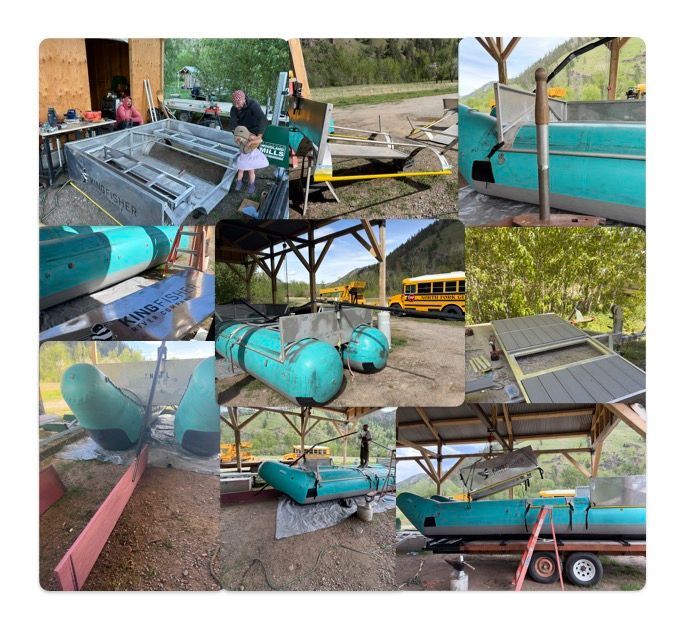
To my delight, Eric was just the kind of guy to be amused by my madness. He supported me in dragging the boat back to life, even though we had absolutely no time to do it. Somehow, we did it. We shined up a functioning J-rig sweep boat just in time for the season, running her on a pair of black, Korean War-era bridge pontoons.
I named the boat Yonder Lies.
The name came from the signs that used to be posted at either end of the Middle Fork once upon a time. The sign at Dagger Falls read: “Yonder Lies the Middle Fork of the Salmon River and the Idaho Primitive Area.”The one at the confluence read: “Yonder Lies the Middle Fork of the Salmon River and the River of No Return Wilderness.” Both of those original signs eventually degraded and were removed.
After that season ended, I placed the frame back in the grass. The next year I once again moved companies but didn't forget the treasure that I left behind. Several years passed before a new confluence log sign was inscribed with: “Yonder Lies the Middle Fork of the Salmon River and the Frank Church River of No Return Wilderness.”
And it wasn't until this last fall and sixteen years later that I pulled it out of its confinement again. Many years had passed since then. It is a strange, quiet wonder how something so useful and beautiful to me could go so long unnoticed by the rest of the world, sitting right there in the dirt. Today,
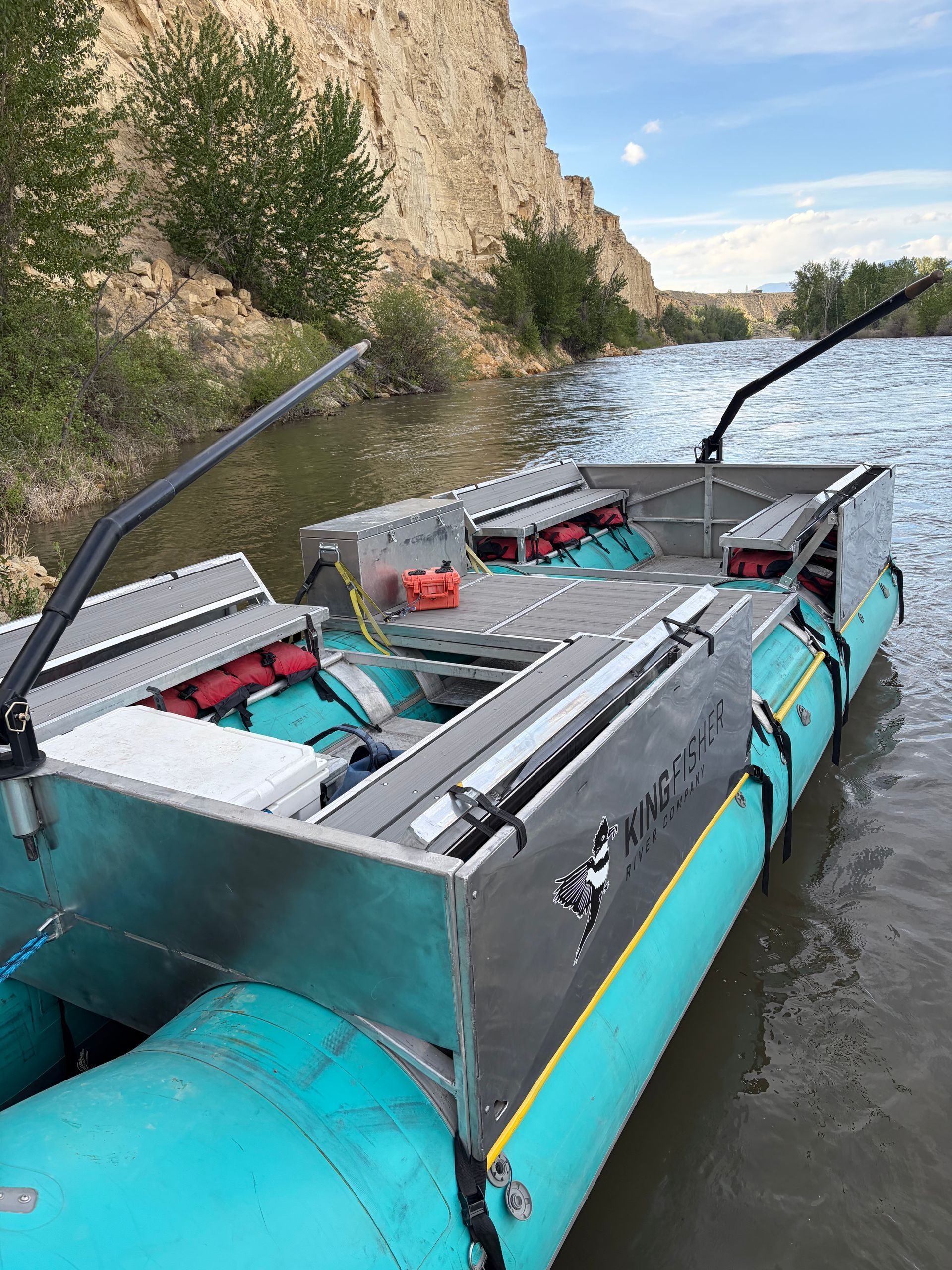
Yonder Lies is out of the shadows. She lives on as a Kingfisher staple, right back where she belongs—in the limelight.
As I bring the boat back to life this second time, I find myself cleaning up after my younger self.
I find holes in the frame that I drilled all those years ago to run straps through to secure a load. Back then, I didn't have the tools or the craftsmanship that I have developed since. Now, I have the chance to improve on my own blemishes. There is also a large scrape and a deep dent from the time I ran the boat into the Powerhouse Wall—a formidable rapid on the Middle Fork that taught me an invaluable lesson, both in life and in boating. Today, I get to revisit those lessons in a completely new chapter of my life.
It is just like a river. We will never be able to start over at our origins, but along the way, we might just find something recognizable floating in the next eddy, waiting to be picked up.